
In the world of blockchain and DeFi, innovative trading mechanisms continually reshape how assets are exchanged on blockchain networks. Among the latest developments is the introduction of Streaming Swaps on THORChain, a method designed to optimize cross-chain trade execution for larger transactions while harnessing the decentralized, on-chain architecture inherent to cryptocurrencies. Streaming Swaps, which resemble the Time-weighted Average Price (TWAP) technique, enhance liquidity, reduce slippage, and improve capital efficiency for traders and LPs in the THORChain ecosystem while never compromising on self-custody or decentralization.
What are Streaming Swaps?
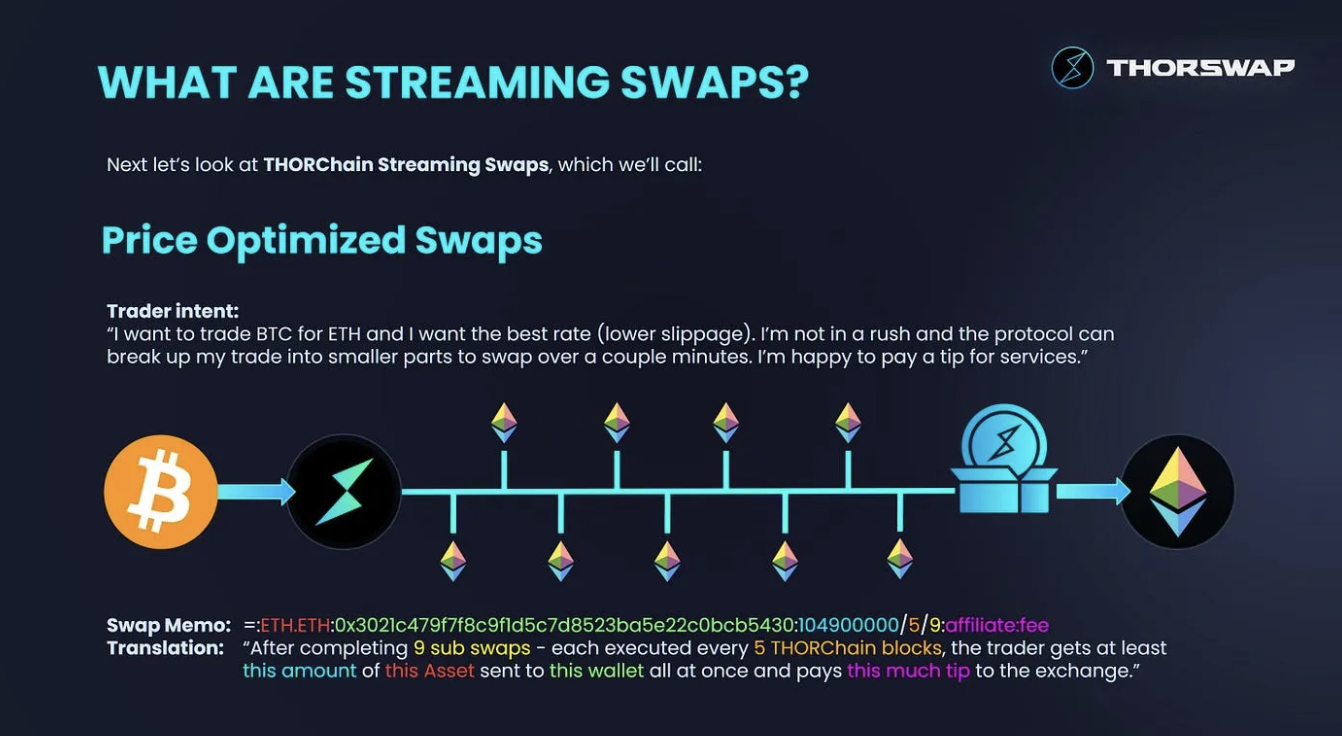
Streaming Swaps are a new trading execution technique designed to facilitate larger trades at the best possible price while maintaining the benefits of decentralized, on-chain trading. Streaming Swaps are very similar to the Time-weighted Average Price (TWAP) technique in which a large swap is broken down into several smaller sub-swaps that are executed sequentially with specified intervals. With Streaming Swaps executed on THORChain, the initiator of the swap can determine both the number of sub-swaps and the block interval between their executions.
Essentially, Streaming Swaps allow users to swap assets continuously without the need for discrete transactions. Unlike traditional DEX swaps, which require users to initiate a new transaction for each swap, Streaming Swaps enable users to maintain an ongoing swap session, where the exchange rate is continuously adjusted based on market conditions.
How Does It Work?
At the core of THORChain’s functionality are its Continuous Liquidity Pools (CLPs), which are integral to facilitating asset swaps. Each CLP comprises two assets, one of which is RUNE, the native token of the THORChain blockchain. By pairing RUNE with other assets such as BTC, ETH, and USDT, THORChain creates liquidity pools that support seamless asset swaps.
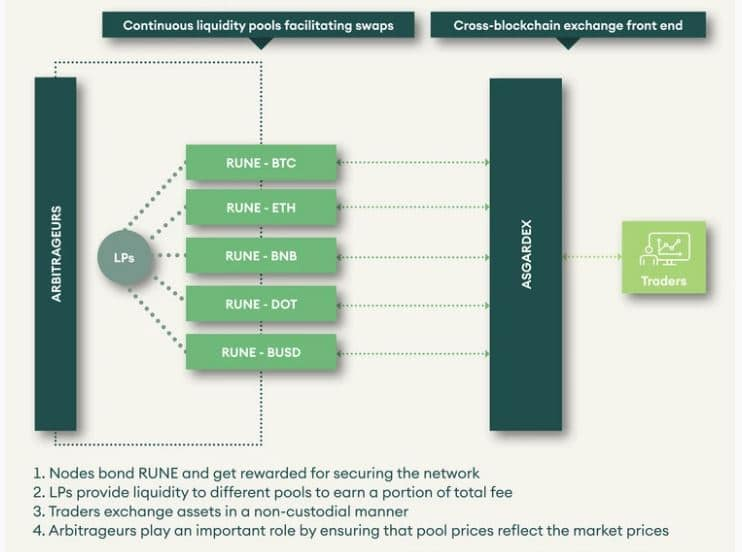
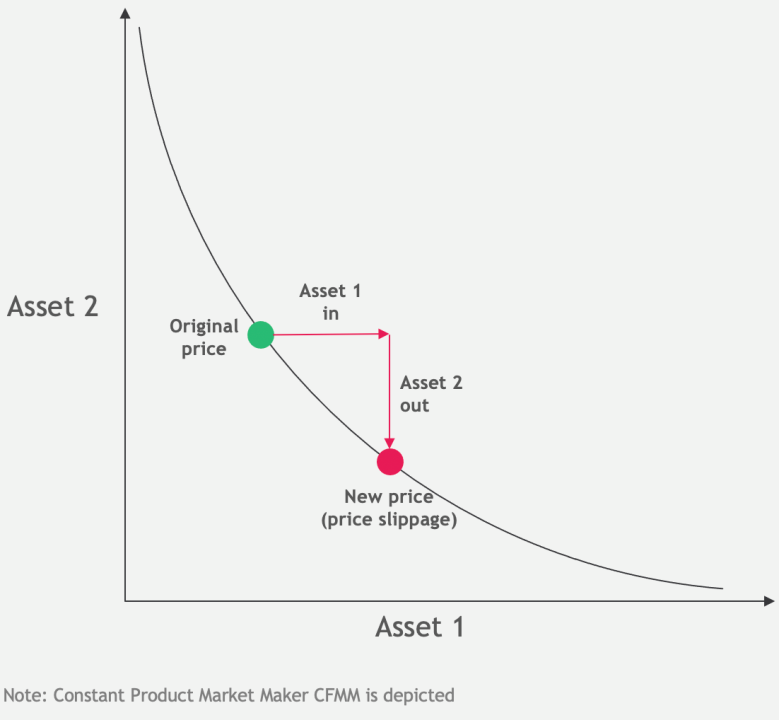
CLPs in THORChain operate similarly to Constant Product Automated Market Maker (CPAMM) pools by maintaining two assets in each pool. However, a key differentiator lies in the fee model and output calculation formula used by CLPs. While CPAMM pools use a constant product formula for swaps, CLPs employ a slip-based fee model. This model adjusts the fees based on the size of the swap relative to the pool's liquidity, resulting in lower output for larger swaps. This model benefits liquidity providers (LPs) via higher annual percentage yields (APYs) and reduced impermanent loss, but large traders suffer from slippage.
In traditional swaps, a significant transaction into an illiquid liquidity pool/AMM incurs high slippage, leading to a less favorable output for the swap initiator. Conversely, Streaming Swaps mitigate this issue by breaking down a large swap into multiple smaller sub-swaps. These sub-swaps are executed over different blocks with intervals between executions, allowing the liquidity pools time to rebalance.
The chart below illustrates a linear relationship between the ideal output of Streaming Swaps and the input amount, although, in practice, pool liquidity may not always readjust to the initial price, resulting in potentially lower output amounts. However, these outputs should never fall below those of sequential small sub-swaps without re-balancing, ensuring that the actual output remains within the highlighted blue area.
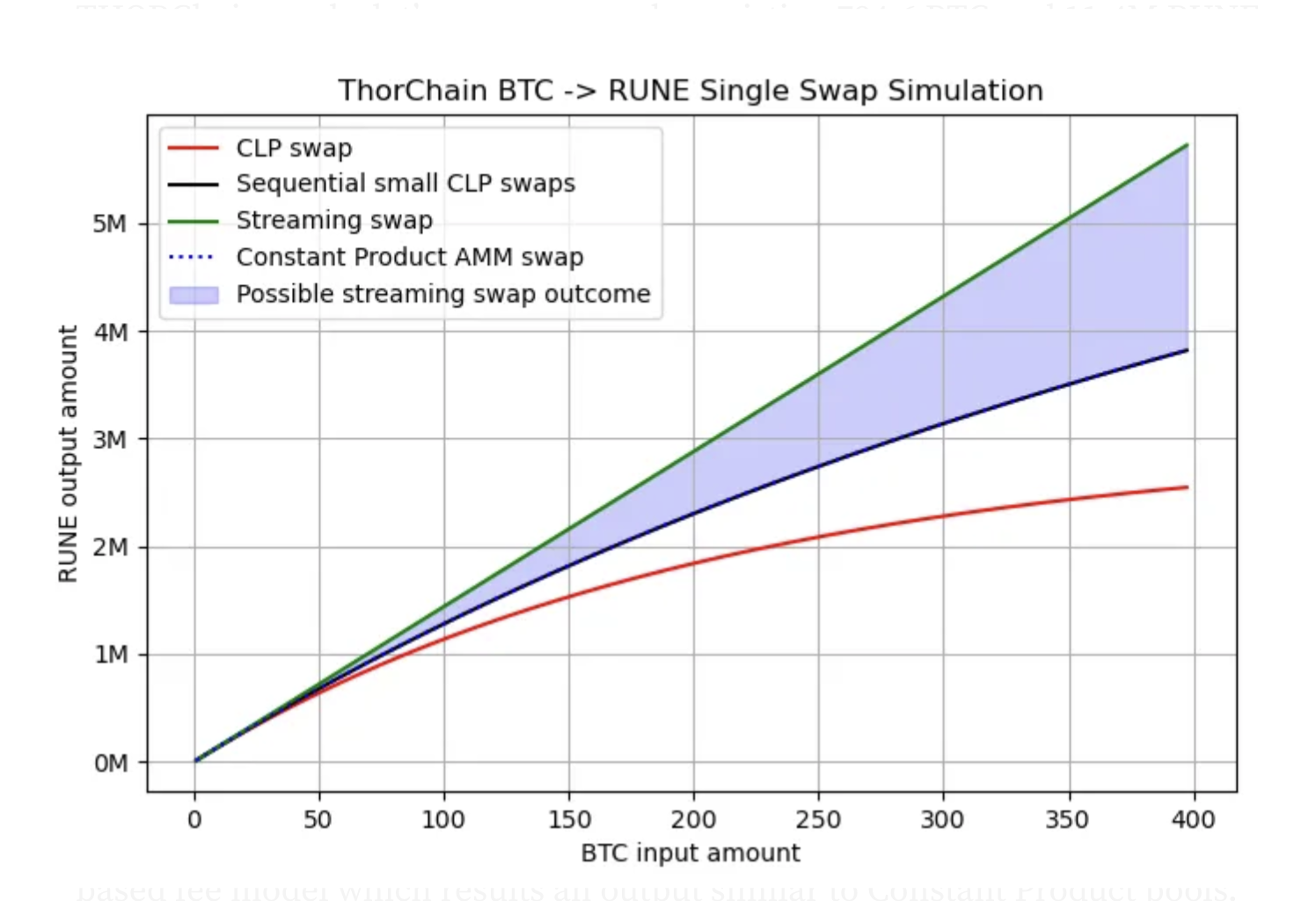
The output amount of Streaming Swaps on THORChain is closer to the linear estimation than to the constant product AMM output as long as two conditions are met:
- The trade volume on THORChain remains smaller compared to centralized exchanges like Binance.
- Arbitrageurs effectively keep THORChain's pools balanced.
If these conditions are satisfied, the streaming swap output will align more with the linear estimation rather than the constant product AMM output.
THORChain's infrastructure supports a high volume of transactions, with the network capable of processing up to 5,000 native transactions per block. This translates to observing ~50 L1 transactions every 6 seconds, equating to about 8 trades per second. It is important to highlight that single-chain AMMs, such as those operating on Ethereum, lack the capability to execute similar functions due to the unique structure of THORChain. THORChain operates within its own blockspace, enabling price rebalancing outside the constraints of Ethereum's L1 block times. This is achieved through the generation of its own blocks that occur within the intervals of Ethereum blocks. Consequently, innovations such as Trade Assets and Synthetic Assets facilitate arbitrage opportunities at the rapid pace of THORChain's block times, which are approximately six seconds.
Benefits of Streaming Swaps
- Enhanced Liquidity: By allowing continuous, smaller swaps (as opposed to one large instantaneous swap), the protocol efficiently manages asset inflows and outflows, fostering market stability and efficiency.
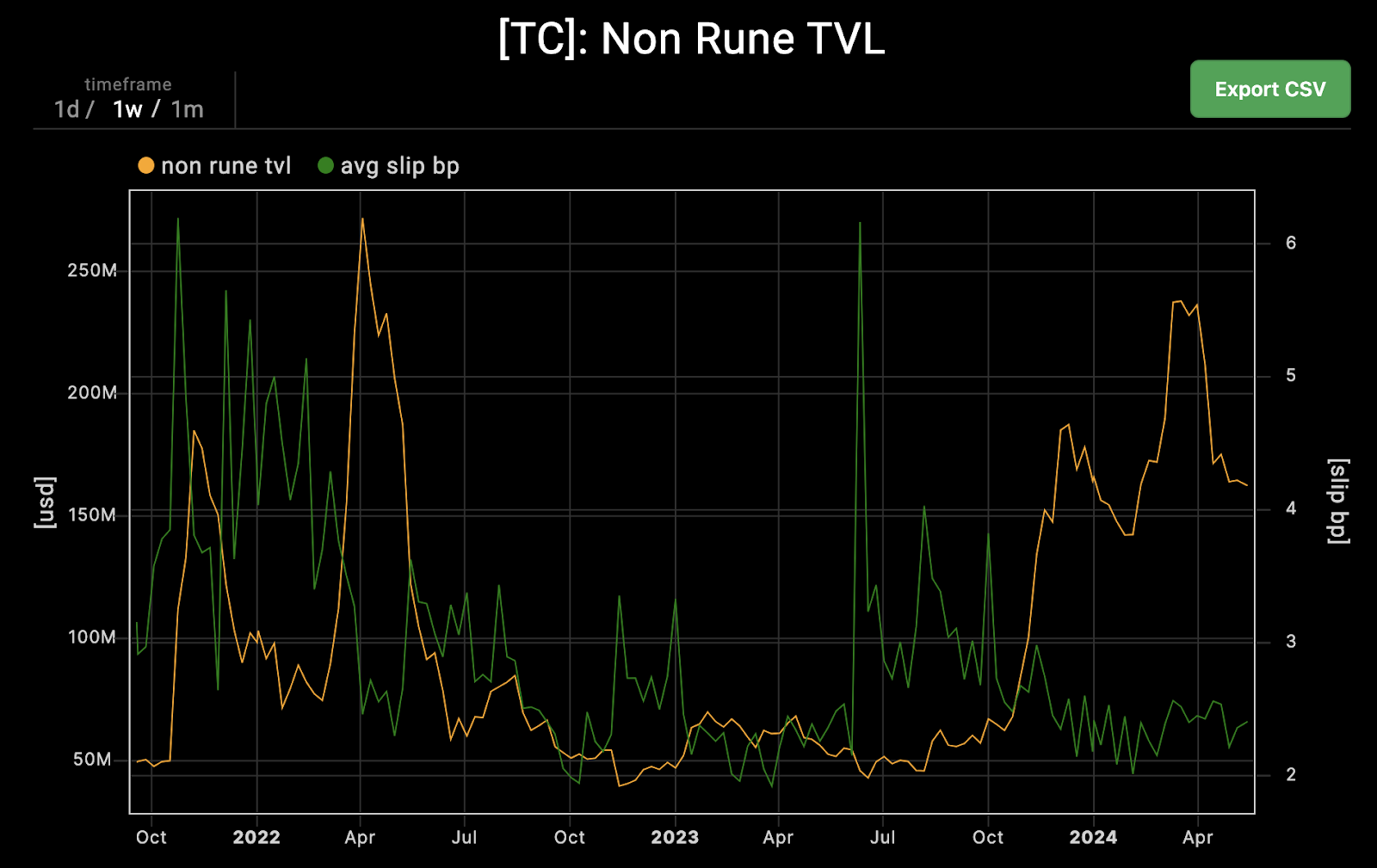
- Capital Efficiency: Unlike traditional methods, where multiple transactions increase cumulative fees, Streaming Swaps consolidate swaps into a single transactional flow. This aggregation significantly reduces traders’ overall transaction costs, making it an economical option for frequent trading. For LPs, it means that their capital is used more effectively, potentially leading to higher returns on invested capital. The efficiency of capital use within THORChain, therefore, becomes a vital metric that influences the attractiveness of the protocol as a primary trading venue.
- On-chain, Non-custodial Trades with Native Layer 1 Assets: A notable feature of Streaming Swaps on THORChain is the support for real Layer 1 assets, including Bitcoin. This capability allows for direct, on-chain trading of major cryptocurrencies in a transparent and open-source environment without the dependency on oracles or third-party services.
- Reduced Slippage: Streaming Swaps’ dynamic adjustment of exchange rates within the swap session helps in mitigating the impact of market volatility, thereby minimizing slippage. Large transactions utilizing Streaming Swaps often result in better execution price compared to leading CEXs.
- Arbitrage Opportunities: Streaming swaps provide unique opportunities for arbitrageurs by dispersing trades into sub-swaps over time. These participants are rewarded for rebalancing the pool which improves execution quality for the swapper.
- A Legitimate CEX Alternative: Streaming Swaps offer several advantages over centralized exchanges. For example, a $1m trade between ETH and BTC can be executed in 33 minutes on THORChain, which is significantly faster than the time it would take to onboard to a CEX and complete the same trade. Additionally, THORChain does not require the same KYC procedures as most leading CEXs, making it a more accessible option for users. Finally, Streaming Swaps can be (and possibly have been) utilized by CEXs behind the scenes to improve their own trades and efficiency.
- Improved User Experience: Traders can maintain ongoing swap activities without repeatedly initiating new transactions. This continuous swapping mechanism simplifies the user interface, reducing the complexity and friction typically associated with traditional DEX interactions.
Impact on THORChain and LPs
Streaming Swaps mark a transformative step in enhancing THORChain’s appeal and operational efficiency thanks to improved trade execution prices for large traders and increased fees for LPs due to increased volumes. For large traders, particularly those transacting amounts over $100,000, execution cost and security are typically the most important factors. As previously explained, Streaming Swaps significantly reduce these costs, potentially as low as 5 basis points, all while leveraging THORChain’s security and decentralized validator set. Large whales can now circumvent the often intrusive and slow process of trading via CEXs, all while remaining on-chain and in control of their funds.
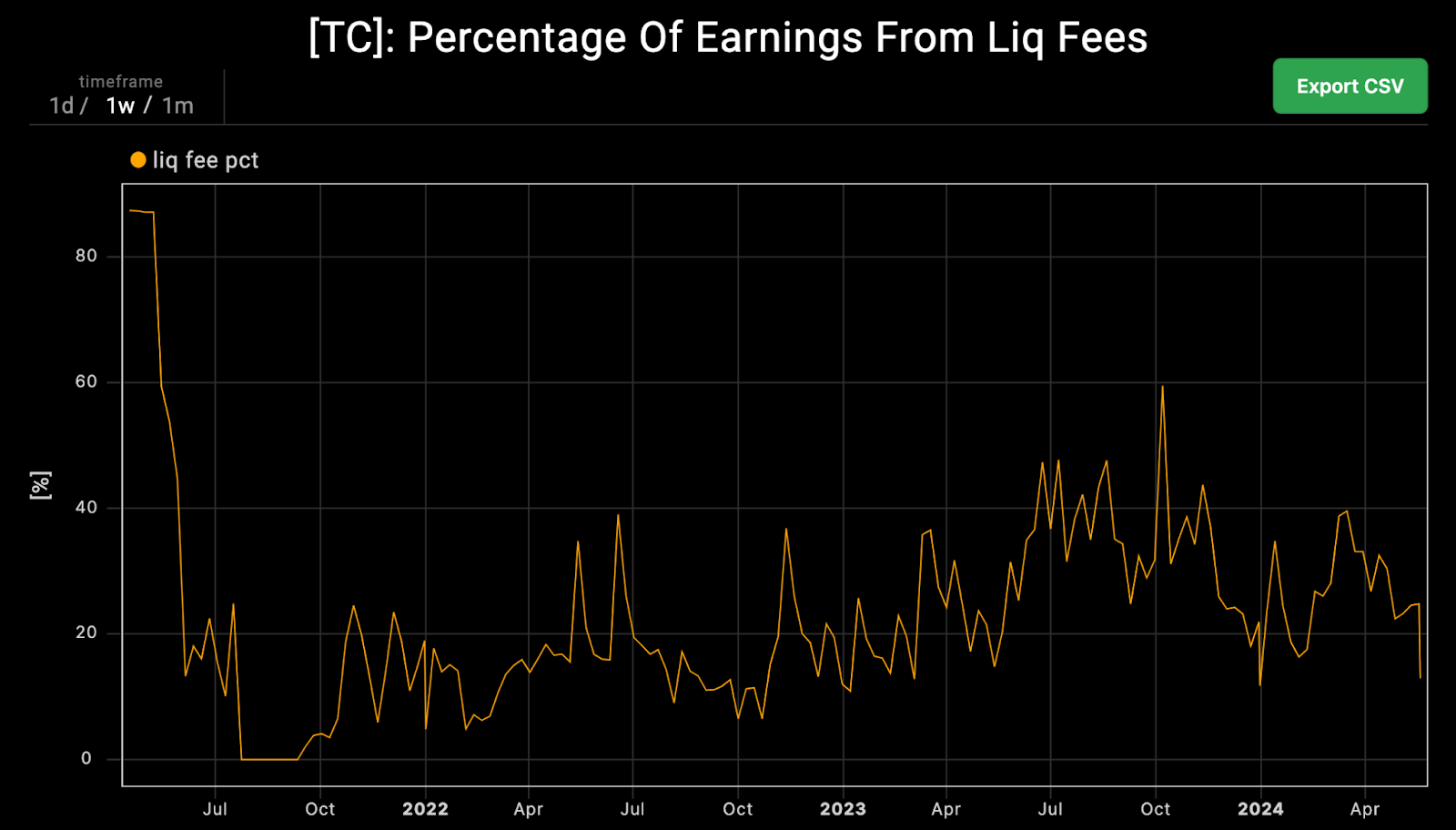
Due to the fee structure and AMM design, DEXs traditionally face a trade-off between capital efficiency and LP returns. Lower fees can improve a DEX's capital efficiency—the ability to achieve higher trading volumes with less total value locked (TVL)—but might initially reduce protocol revenue. However, THORChain's deployment of Streaming Swaps challenges this norm, having seen the percentage of (LP and Node) earnings generated by liquidity (swap) fees increase steadily since bottoming out at around ~2% in late 2021.
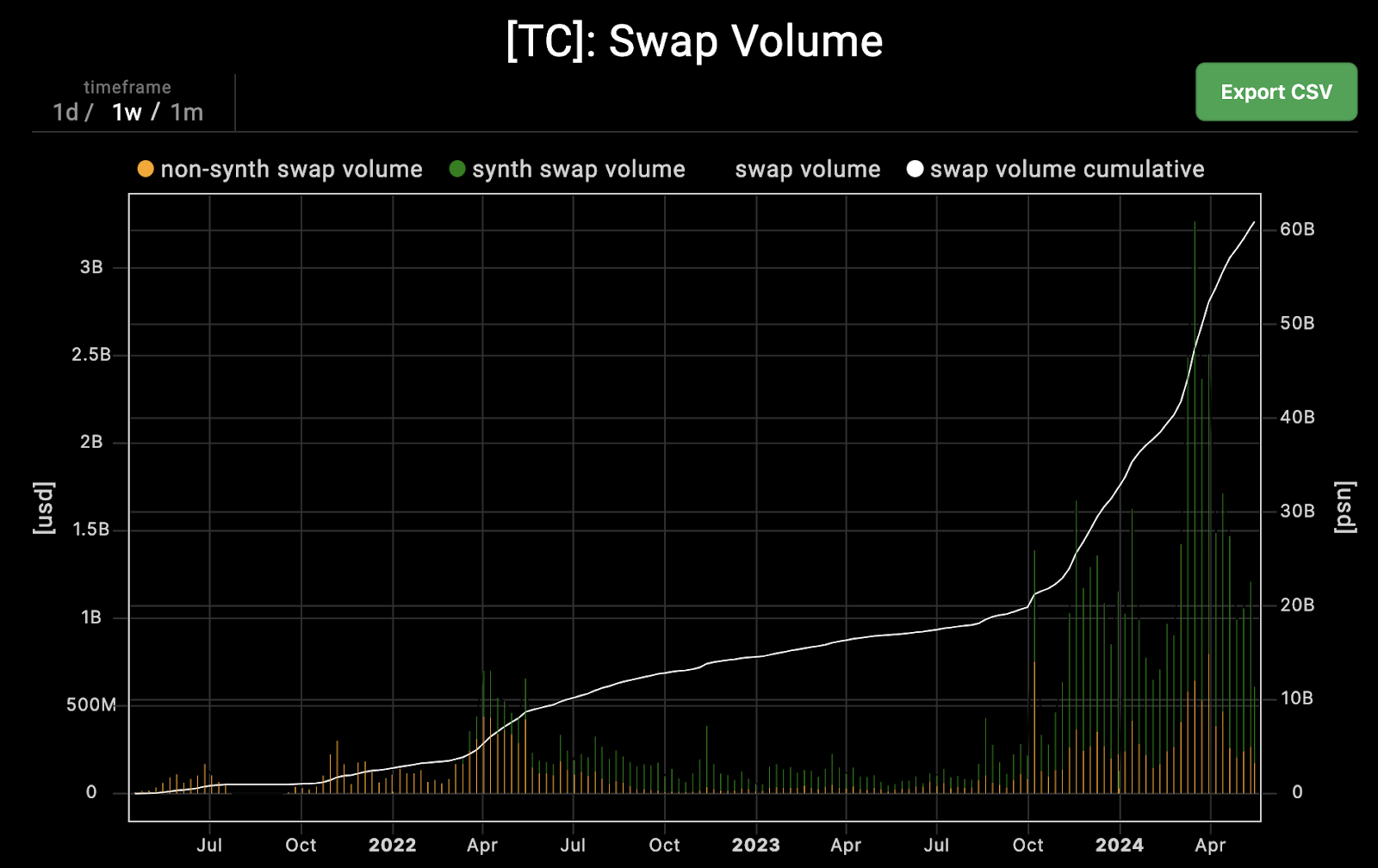
The reduction in trading costs directly correlates with an increase in trading volume. As Streaming Swaps make large-scale trades more feasible and financially attractive, the volume on THORChain has substantially increased, with daily trading volumes experiencing surges of approximately 10x on certain days. This volume increase is critical as it compensates for the lower individual transaction fees by aggregating minimal fees over larger transactions. Moreover, higher volumes contribute to the liquidity and stability of the market, enhancing overall user confidence in the platform.
Conclusion
The deployment of Streaming Swaps by THORChain represents a significant stride forward in the evolution of trading mechanisms within the decentralized finance landscape. By enabling continuous, strategically timed sub-swaps, THORChain not only mitigates the detrimental impact of slippage on large transactions but also enhances capital efficiency and liquidity management. This innovation offers tangible benefits such as reduced transaction costs, enhanced arbitrage opportunities, and a simplified user experience, positioning THORChain as a robust competitor to both traditional DEXs and CEXs. As the adoption of Streaming Swaps grows, their potential to reshape the trading dynamics on decentralized platforms underscores a broader movement toward more sophisticated and efficient blockchain-based financial systems.
Disclaimer: This report was commissioned by Thorchain. This research report is exactly that — a research report. It is not intended to serve as financial advice, nor should you blindly assume that any of the information is accurate without confirming through your own research. Bitcoin, cryptocurrencies, and other digital assets are incredibly risky and nothing in this report should be considered an endorsement to buy or sell any asset. Never invest more than you are willing to lose and understand the risk that you are taking. Do your own research. All information in this report is for educational purposes only and should not be the basis for any investment decisions that you make.


